
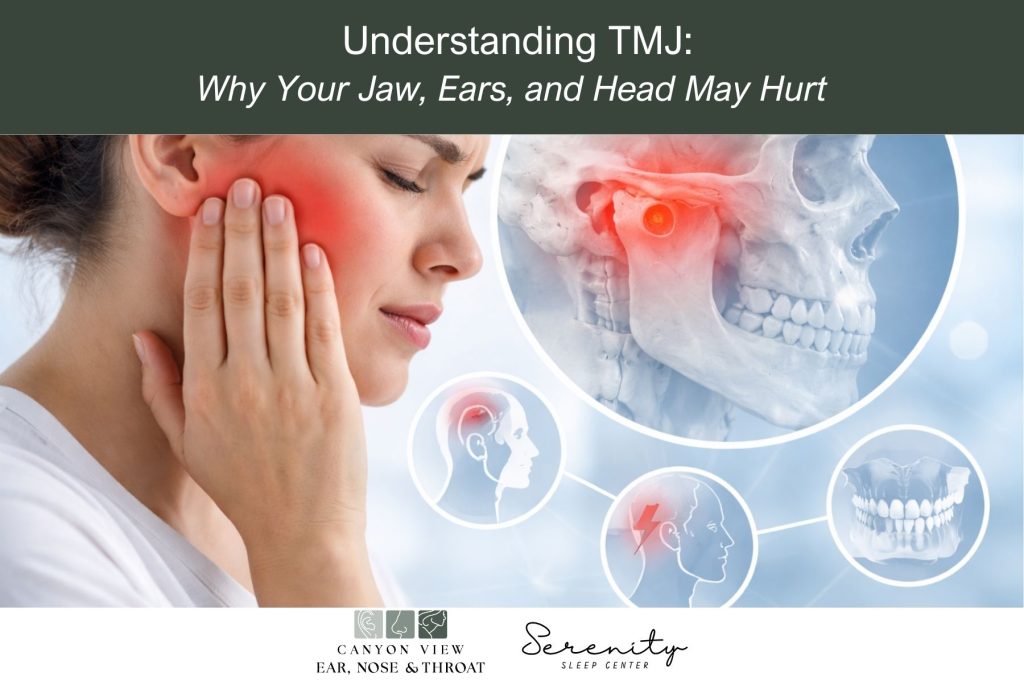
Jaw pain, headaches, clicking sounds when you chew, or facial discomfort may seem like minor annoyances—but they can all point to a condition known as TMJ disorder. At Canyon View Ear, Nose & Throat, we help patients in Cedar City and Southern Utah understand, diagnose, and manage TMJ-related symptoms so they can get back to living comfortably.
What Is TMJ?
TMJ stands for temporomandibular joint, the joint that connects your jawbone to your skull. You have one TMJ on each side of your face, and these joints work together every time you talk, chew, yawn, or swallow. When something goes wrong with this joint or the surrounding muscles, it can result in TMJ disorder (TMD).
TMJ disorders can range from mild and temporary to chronic and painful, and symptoms often overlap with ear, nose, throat, and facial pain—making evaluation by an ENT specialist especially important.
Common Causes of TMJ Disorders
TMJ disorders can develop for a variety of reasons, including:
- Jaw clenching or teeth grinding (bruxism)
- Stress leading to muscle tension in the jaw
- Arthritis affecting the jaw joint
- Jaw injury or trauma
- Misalignment of the teeth or bite
- Disc displacement within the jaw joint
In many cases, the exact cause isn’t a single factor but a combination of muscle strain, joint irritation, and stress-related habits.
Signs and Symptoms of TMJ Disorders
TMJ symptoms often extend beyond the jaw itself and may include:
- Jaw pain or tenderness
- Clicking, popping, or grinding sounds when opening or closing the mouth
- Difficulty or discomfort while chewing
- Locking of the jaw (open or closed)
- Facial pain or pressure
- Headaches or migraines
- Ear pain, fullness, or ringing (tinnitus)
- Neck and shoulder pain
Because TMJ symptoms can mimic ear infections or sinus issues, many patients first seek help from an ENT specialist.
How TMJ Is Diagnosed
At Canyon View Ear, Nose & Throat, diagnosing TMJ begins with a thorough evaluation, including:
- Review of symptoms and medical history
- Physical examination of the jaw, face, ears, and neck
- Assessment of jaw movement and bite alignment
- Imaging studies if needed, such as X-rays or other scans
An accurate diagnosis is essential to rule out other ear or sinus conditions and to develop an effective treatment plan.
TMJ Treatment Options
Treatment for TMJ disorders is often conservative and customized to each patient’s symptoms and severity. Common approaches include:
- Lifestyle and habit modifications (avoiding gum chewing, jaw clenching)
- Stress management techniques
- Jaw exercises and physical therapy
- Anti-inflammatory or muscle-relaxing medications
- Bite guards or oral appliances (in coordination with dental providers)
- Treatment of contributing ENT conditions, such as ear or sinus inflammation
Surgical treatment is rarely needed and is typically considered only after conservative options have been exhausted.
TMJ Q&A: Common Questions Answered
Q: Is TMJ a serious condition?
A: TMJ disorders are usually not life-threatening, but they can significantly impact quality of life if left untreated. Early evaluation helps prevent worsening symptoms.
Q: Can TMJ cause ear pain?
A: Yes. The TMJ is located very close to the ear canal, which is why TMJ disorders often cause ear pain, pressure, or ringing even when there’s no ear infection.
Q: How do I know if my jaw pain is TMJ or something else?
A: Because TMJ symptoms overlap with ear, sinus, and throat conditions, an ENT evaluation is often the best way to determine the true cause of your pain.
Q: Does stress really affect TMJ?
A: Absolutely. Stress can lead to jaw clenching and muscle tension, which are major contributors to TMJ symptoms.
Q: Can TMJ go away on its own?
A: Mild cases may improve with rest and lifestyle changes, but persistent or worsening symptoms should be evaluated by a specialist.
Q: Do I need surgery for TMJ?
A: Most patients do not. The majority of TMJ cases respond well to conservative, non-surgical treatments.
Q: Should I see an ENT or a dentist for TMJ?
A: Both can play important roles. An ENT specialist is especially helpful when symptoms involve ear pain, facial pressure, headaches, or sinus-like symptoms.
When to Seek Help
If you experience persistent jaw pain, ear discomfort without infection, headaches, or jaw clicking that doesn’t improve, it’s time to seek professional care. Early treatment can prevent chronic pain and long-term joint issues.
Contact Canyon View Ear, Nose & Throat
Canyon View Ear, Nose & Throat
1251 N Northfield Rd, Ste 200
Cedar City, UT 84721
📞 Phone: (435) 867-8719
🌐 Website: https://canyonviewent.com