
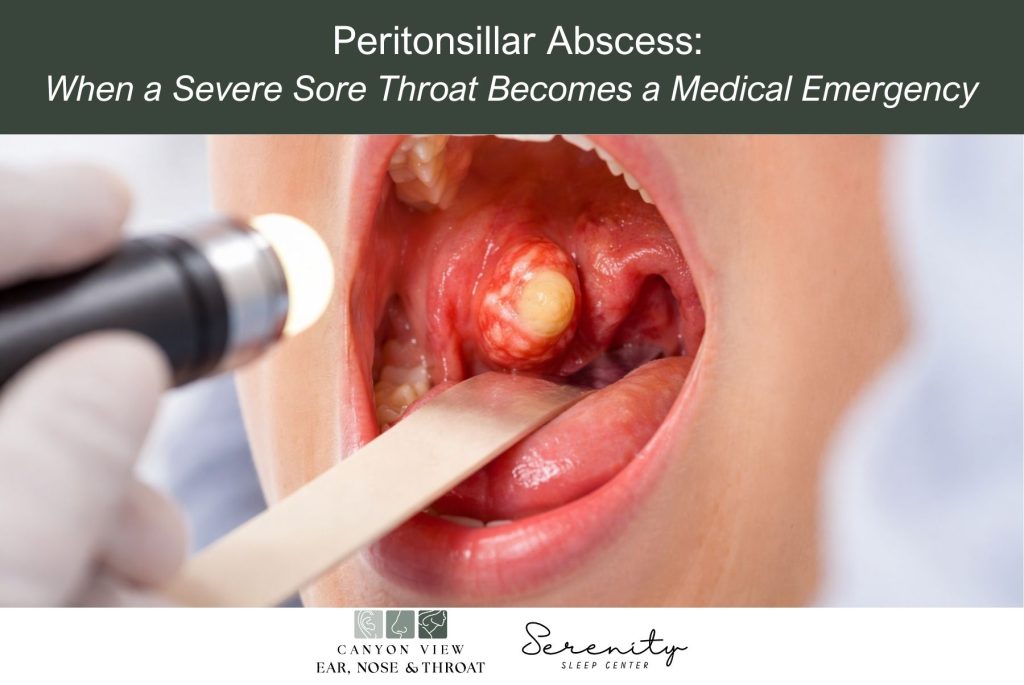
A peritonsillar abscess is a serious infection that develops near the tonsils and can cause significant pain and complications if left untreated. While it often starts as a common sore throat or tonsillitis, it can progress quickly and require prompt medical attention from an ear, nose, and throat (ENT) specialist.
At Canyon View Ear, Nose & Throat, we specialize in diagnosing and treating conditions like peritonsillar abscess to help patients recover safely and comfortably.
What Is a Peritonsillar Abscess?
A peritonsillar abscess (sometimes called a quinsy) is a pocket of pus that forms in the tissues surrounding one of the tonsils. It is most commonly seen in older children, teenagers, and adults and usually develops as a complication of untreated or severe tonsillitis.
This condition is considered a medical urgency because swelling near the throat can interfere with swallowing, breathing, and speaking.
Common Symptoms of a Peritonsillar Abscess
Symptoms often worsen rapidly and may include:
- Severe sore throat (usually on one side)
- Fever and chills
- Difficulty or pain when swallowing
- Muffled or “hot potato” voice
- Ear pain on the same side as the sore throat
- Swelling of the face or neck
- Difficulty opening the mouth fully (trismus)
- Bad breath
- Drooling due to difficulty swallowing
If you or your child experiences these symptoms, especially after a recent throat infection, it’s important to seek ENT care right away.
What Causes a Peritonsillar Abscess?
Peritonsillar abscesses are typically caused by bacterial infections, often the same bacteria responsible for strep throat or tonsillitis. Common contributing factors include:
- Untreated or partially treated tonsillitis
- Recurrent throat infections
- Smoking
- Weakened immune system
- Poor oral hygiene
How Is a Peritonsillar Abscess Diagnosed?
An ENT specialist can usually diagnose a peritonsillar abscess through:
- A detailed medical history
- Physical examination of the throat
- Evaluation of symptoms such as voice changes and mouth opening
- In some cases, imaging (such as ultrasound or CT scan) to confirm the diagnosis or rule out other conditions
Treatment Options for Peritonsillar Abscess
Treatment depends on the severity of the abscess but may include:
Antibiotics
Oral or intravenous antibiotics are used to treat the underlying bacterial infection.
Drainage of the Abscess
If pus has collected, the abscess may need to be drained using a needle or small incision. This is often done in-office or in a hospital setting.
Pain and Symptom Management
Medications may be prescribed to reduce pain, fever, and inflammation.
Tonsillectomy (In Some Cases)
For patients with recurrent peritonsillar abscesses or chronic tonsillitis, removal of the tonsils may be recommended to prevent future infections.
Why Early Treatment Matters
Without prompt treatment, a peritonsillar abscess can lead to serious complications, including:
- Spread of infection to the neck or chest
- Airway obstruction
- Dehydration
- Sepsis
Early evaluation by an ENT specialist significantly reduces the risk of complications and speeds recovery.
Peritonsillar Abscess: Frequently Asked Questions (Q&A)
Q: Is a peritonsillar abscess contagious?
A: The abscess itself is not contagious, but the underlying infection (such as strep throat) can be spread to others.
Q: Can a peritonsillar abscess go away on its own?
A: No. This condition almost always requires medical treatment. Delaying care can lead to serious complications.
Q: How long does recovery take?
A: Most patients begin to feel better within a few days after proper treatment, though full recovery may take one to two weeks.
Q: Can children get a peritonsillar abscess?
A: Yes, though it is more common in teenagers and adults. Children with severe sore throat symptoms should still be evaluated promptly.
Q: Will I need surgery?
A: Not always. Many abscesses resolve with antibiotics and drainage. Surgery is typically reserved for recurrent cases or severe infections.
Q: How can I prevent a peritonsillar abscess?
A: Prompt treatment of sore throats and tonsillitis, completing prescribed antibiotics, and maintaining good oral hygiene can help reduce risk.
When to See an ENT Specialist
If you experience a severe sore throat, trouble swallowing, fever, or voice changes—especially on one side—it’s important to seek expert care right away. Early diagnosis and treatment can prevent complications and promote faster healing.
Contact Canyon View Ear, Nose & Throat
Canyon View Ear, Nose & Throat
1251 N Northfield Rd, Ste 200
Cedar City, UT 84721
Phone: (435) 867-8719
Website: https://canyonviewent.com