
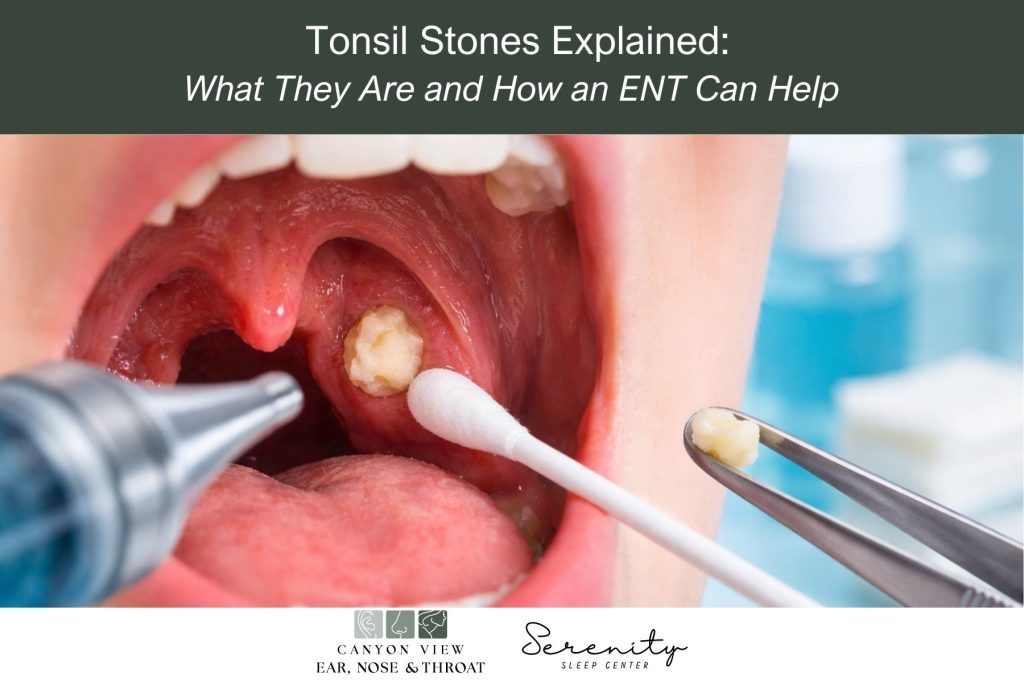
Tonsil stones, also known as tonsilloliths, are a common but often misunderstood condition that can cause discomfort, bad breath, and irritation in the throat. While they are usually not dangerous, tonsil stones can be persistent and frustrating for many patients.
At Canyon View Ear, Nose & Throat, we regularly help patients in Cedar City and surrounding areas understand, manage, and treat tonsil stones effectively. Below, we’ll explain what tonsil stones are, why they form, how to recognize them, and when it’s time to see an ENT specialist.
What Are Tonsil Stones?
Tonsil stones are small, hardened deposits that form in the crevices (called crypts) of the tonsils. These deposits are made up of:
- Food particles
- Dead cells
- Bacteria
- Mucus
Over time, this material can calcify and harden, forming visible white or yellowish stones.
What Causes Tonsil Stones?
Several factors can increase your risk of developing tonsil stones, including:
- Deep tonsil crypts
- Chronic tonsillitis
- Poor oral hygiene
- Postnasal drip
- Dry mouth
- Frequent throat infections
People who experience frequent sore throats or sinus issues are more likely to develop tonsil stones.
Common Symptoms of Tonsil Stones
Some people have tonsil stones without noticeable symptoms, while others experience:
- Persistent bad breath (halitosis)
- A feeling of something stuck in the throat
- Sore throat or irritation
- Difficulty swallowing
- Ear pain (referred pain)
- White or yellow debris visible on the tonsils
- Metallic or unpleasant taste
If these symptoms are ongoing, an ENT evaluation may be helpful.
How Are Tonsil Stones Diagnosed?
Tonsil stones are often diagnosed through:
- A physical examination
- Review of symptoms
- In some cases, imaging such as X-rays or CT scans (for larger or hidden stones)
An ENT specialist can confirm whether your symptoms are caused by tonsil stones or another condition.
Tonsil Stone Treatment Options
At-Home Management
For mild cases, conservative treatments may help:
- Gargling with warm salt water
- Maintaining excellent oral hygiene
- Staying well hydrated
- Using a water flosser on a low setting (with caution)
Medical Treatment
If tonsil stones are frequent, painful, or causing significant bad breath, medical treatment may include:
- Prescription mouth rinses
- Antibiotics (if infection is present)
- Professional removal by an ENT specialist
Tonsillectomy
For chronic or severe cases, tonsil removal (tonsillectomy) may be recommended as a permanent solution. Your ENT provider will help determine if this is appropriate for you.
Comprehensive Q&A: Tonsil Stones
Q: Are tonsil stones dangerous?
A: Tonsil stones are usually harmless, but chronic cases can cause discomfort, infections, and social concerns due to bad breath.
Q: Can tonsil stones go away on their own?
A: Small tonsil stones may dislodge naturally, but recurring stones often require medical management.
Q: Why do tonsil stones smell so bad?
A: They contain sulfur-producing bacteria, which cause the strong odor associated with bad breath.
Q: Can children get tonsil stones?
A: Yes, though they are more common in adolescents and adults, especially those with frequent throat infections.
Q: Do tonsil stones mean I need my tonsils removed?
A: Not always. Tonsillectomy is considered only when stones are chronic, painful, or unresponsive to other treatments.
Q: How can I prevent tonsil stones?
A: Good oral hygiene, staying hydrated, managing allergies or sinus issues, and regular dental care can reduce the risk.
Q: When should I see an ENT specialist?
A: If tonsil stones are frequent, painful, causing persistent bad breath, or affecting your quality of life, it’s time to see an ENT.
Expert Care at Canyon View Ear, Nose & Throat
If tonsil stones are interfering with your comfort or confidence, the experienced team at Canyon View Ear, Nose & Throat is here to help. We offer personalized evaluations and advanced treatment options to address tonsil stones and other ENT concerns.
Contact Information
Canyon View Ear, Nose & Throat
1251 N Northfield Rd, Ste 200
Cedar City, UT 84721
📞 Phone: (435) 867-8719
🌐 Website:canyonviewent.com